ESU SD90 Scale Loksound Kato Sound Decoder 4044645587812
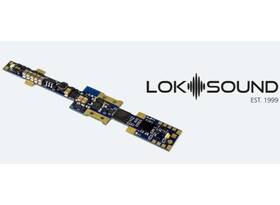
( Brand: Esu ), ( Type: Decoder ), ( Age Level: 17 Years Up ), ( Country Of Origin: China ), ( UPC: 044645587812 )
Review ESU Scale Loksound Kato Dcc Direct Sound Decoder 58781
The **ESU LokSound Kato SD90 Sound Decoder (Model 58781, Part Number 044645587812)** is a high-performance, digitally programmable sound decoder designed to bring the iconic Japanese SD90 diesel locomotive to life with stunning realism and immersive audio. Part of the renowned **LokSound** series, this decoder is engineered to deliver crystal-clear, dynamic sound effects that replicate the authentic roar, exhaust pulses, and intricate mechanical details of the SD90, a powerful and widely recognized locomotive in model railroading. Built to ESU s exacting standards, it integrates seamlessly with **Kato s** meticulously crafted SD90 models, ensuring an unparalleled level of authenticity for both static displays and dynamic operation.
At its core, the **SD90 Sound Decoder** features **LokSound s advanced digital sound processing**, which includes **16-bit audio resolution** and **stereo sound output**, allowing for a rich, layered soundscape that captures the nuanced exhaust tones, horn blasts, and even subtle vibration effects that define the SD90 s character. The decoder supports **multiple sound modes**, including **realistic exhaust variations** (such as single or double-stack exhausts), **dynamic horn patterns**, and **engine noise adjustments** that adapt to speed and throttle position, creating a lifelike experience that responds to your model s movements. Whether your SD90 is idling at a station, accelerating down a grade, or pulling a heavy freight train, the decoder s **speed-dependent sound scaling** ensures that every nuance is faithfully reproduced.
One of the standout features of this decoder is its **compatibility with modern digital control systems**, including **DCC (Digital Command Control) protocols** such as **NMRA standards** and **ESU s proprietary LokNet** for advanced functionality. The **58781 model** is equipped with **ESU s LokSound 2.0 firmware**, which enhances its versatility with features like **customizable sound profiles**, **remote control via Bluetooth or Wi-Fi** (depending on the system configuration), and **smooth transitions between sounds** for a seamless operational experience. Additionally, the decoder supports **multiple sound effects**, such as **pantograph operation**, **coupler clanks**, and **brake squeals**, further enriching the realism of your SD90 in operation.
For modelers seeking **plug-and-play convenience**, the **SD90 Sound Decoder** is designed with **easy installation in mind**. It features a **compact, durable housing** that fits neatly into most Kato SD90 models, with **pre-wired connections** for straightforward integration. The decoder also includes **adjustable volume controls** for both the **exhaust and engine sounds**, allowing you to fine-tune the audio to your preference without sacrificing authenticity. Whether you re running a **single-unit SD90** or incorporating it into a **multi-locomotive consist**, the decoder s **robust power handling** ensures reliable performance even under demanding conditions.
Beyond its technical capabilities, the **ESU LokSound Kato SD90 Decoder** is a testament to **ESU s commitment to innovation and precision**. The **high-quality components** used in its construction guarantee **long-lasting durability**, while the **detailed sound programming** ensures that your SD90 stands out as a **showstopping centerpiece** on any layout. Whether you re a seasoned modeler looking to elevate your collection or a newcomer eager to experience the thrill of realistic sound, this decoder delivers an **unmatched level of immersion** that transforms your Kato SD90 from a static display piece into a **dynamic, lifelike powerhouse** that commands attention with every movement. With the **ESU LokSound Kato SD90 Sound Decoder (58781)**, the roar of the SD90 s diesel engines and the rhythmic pulse of its exhaust become an integral part of your model railroad s storytelling.
The **ESU 044645587812 Scale Loksound Kato SD90 Sound Decoder** is a popular sound decoder for N-scale model railroading, particularly for Japanese locomotives like the SD90. Below is a detailed breakdown of its pros and cons, followed by a conclusion and recommendation.
---
### **Pros**
1. **High-Quality Sound Output**
The decoder is designed to produce realistic locomotive sounds, including detailed engine noises, horn patterns, and bell sounds. It supports multiple sound files, allowing for variations in operation (e.g., different horn sequences or engine tones).
2. **Compatibility with Kato Locomotives**
It is specifically optimized for Kato s SD90 and other Japanese N-scale models, ensuring seamless integration with their motor and control systems. This reduces the risk of compatibility issues that can arise with generic decoders.
3. **Advanced Features**
- **Sound-on-Sound (SoS) and Sound-on-Sound Plus (SoS ):** Allows for layered sounds (e.g., engine noise combined with horn or bell sounds).
- **Dynamic Braking Sounds:** Simulates realistic braking noises, which enhances realism.
- **Multiple Sound Files:** Supports different sound profiles for varying operational modes (e.g., freight vs. passenger service).
- **DCC Control:** Fully compatible with DCC systems (e.g., NCE, Digitrax, or MRC), offering precise control over speed, direction, and functions.
4. **Easy Installation**
The decoder is designed for straightforward installation, even for beginners. It typically fits into the motor compartment of Kato locomotives without requiring extensive modifications. The wiring is simple, and the instructions are clear.
5. **Durability and Reliability**
ESU decoders are known for their robustness. The Kato-specific model is built to withstand the demands of model railroading, including repeated use and potential environmental factors (e.g., humidity or temperature fluctuations).
6. **Support for Advanced Functions**
- **Light Emission (LEDs):** Some versions support LED control for headlights or running lights, adding to the realism of the locomotive.
- **Consist Operation:** Can be linked to other decoders for multi-unit operation (e.g., coupled locomotives).
- **Programming Flexibility:** Can be programmed via a PC or handheld programmer for custom sound sequences or function mappings.
7. **Positive Community Feedback**
Many users report high satisfaction with the sound quality and reliability of this decoder. Online forums and reviews often highlight its ability to significantly enhance the realism of Kato locomotives.
---
### **Cons**
1. **Cost**
The decoder is not inexpensive, especially when compared to generic sound decoders. For hobbyists on a tight budget, this may be a significant investment, particularly if they own multiple locomotives.
2. **Limited to Kato Locomotives**
While it works exceptionally well with Kato models, it may not be as effective or compatible with other brands locomotives. Users with mixed fleets may need multiple decoders or face limitations in sound quality.
3. **Sound File Limitations**
The decoder relies on pre-loaded sound files. While these are high-quality, users cannot create or modify their own sound files without additional software or tools. This limits customization compared to decoders that support user-generated sounds.
4. **Programming Complexity**
While the decoder is user-friendly, advanced features like custom sound sequences or function mappings may require some learning curve. Beginners might find programming tasks (e.g., setting up SoS or dynamic braking) challenging without guidance.
5. **Potential for Interference**
Like all DCC decoders, it can be susceptible to interference from other electronic devices or poorly shielded wiring. Users in electrically noisy environments may need to take extra precautions (e.g., using shielded cables or isolating the layout).
6. **Warranty and Support**
While ESU has a good reputation, warranty claims or support issues may require shipping the decoder back to the manufacturer. For hobbyists in regions with slow shipping or limited support, this could be a minor inconvenience.
7. **Physical Space Requirements**
Some Kato locomotives have tight motor compartments, and the decoder s size may require careful placement. In rare cases, it might not fit without minor modifications to the locomotive s interior.
---
### **Conclusion**
The **ESU 044645587812 Scale Loksound Kato SD90 Sound Decoder** is an excellent choice for hobbyists who own Kato locomotives and prioritize high-quality, realistic sound. Its strengths lie in its compatibility with Kato models, advanced sound features, and ease of installation. However, its cost, limited compatibility with non-Kato locomotives, and minor programming complexities are drawbacks to consider.
For users who are invested in Kato s N-scale Japanese locomotives and want to significantly enhance their realism, this decoder is a worthwhile investment. Those with mixed fleets or budget constraints may need to weigh the pros and cons carefully or consider alternative decoders that offer broader compatibility or customization options.
---
### **Recommendation**
- **Buy it if:**- You own a Kato SD90 or other compatible N-scale locomotive and want to add realistic sound.
- You are willing to invest in a high-quality decoder that enhances the realism of your layout.
- You are comfortable with DCC systems and basic programming tasks.
- You prioritize sound quality and advanced features like SoS or dynamic braking.
- **Consider alternatives if:**- You have a limited budget and are unsure about committing to a decoder for a single locomotive.
- You own locomotives from other brands and need a more versatile decoder.
- You are interested in user-generated sound files or highly customizable decoders (e.g., some MERG or Bachmann decoders offer broader flexibility).
For most Kato enthusiasts, this decoder delivers outstanding value and significantly improves the auditory experience of their layouts. Pair it with a reliable DCC system and proper wiring practices to ensure the best results.
Details:
Braking with DCC brake blocks or dc voltage is also possible. The unique Auto tune function allows the decoder to be automatically measured against motor. Alternatively, two enclosed conventional, wired Leds can be soldered in and switched separately. The LokSound 5 micro DCC Direct Kato USA SD90 with its dimensions of 60.5mm x 10.5mm is a pure decoder.
There is virtually no difference to the original audible anymore. Finally, these model's can also be easily retrofitted with a LokSound decoder. Protection: Of course, the outputs are protected against overload. In addition, it also stops with a Selectric brake diode.
In addition, three further amplified function outputs and a logic level output are available all important light functions. Two directly soldered SMD Leds are provided for front and rear illumination. An AUTOMATIC ABC commuter train allows automatic commuting between two stations. The super-flexible sound engine without a rigid sequence plan allows the prototypical accurate simulation of all conceivable rail vehicles.
Thanks to , the decoders log in fully a suitable digital center.It masters all DCC programming modes and thanks Rail Com CV values can be read out on main track with control panels. The decoder switches between the operating modes fully automatically on-the-fly. The brightness of each output can be adjusted separately. Modes: The LokSound 5 micro DCC Direct Kato USA SD90 is a pure-bred decoder.
14 to 128 driving steps are as self-evident 2 and 4-digit addresses. The LokSound 5 micro DCC Direct Kato USA SD90 was specially developed for installation in some N gauge vehicles: It fits all locomotives of the SD90, SD90/43MAC or SD80MAC model's instead standard analog board. In most cases, nothing needs to be set. The volume of all individual sounds can be adjusted individually.
Iron Planet Hobbies.
part #: 044645587812 prices
- $99.99-$107.95
specifications dccsystemsacc:
- brand: Esu
- type: Decoder
- age level: 17 Years Up
- country of origin: China
- upc: 044645587812
returns dccsystemsacc:
- time: 30 Days
- policy: Returns Accepted
- method: Money back
- paid by: Seller
shipping dccsystemsacc:
- service: Expedited
- cost: $7.89
- transit: 4-8 Days
- type: Fixed
- class: Expedited
offer dccsystemsacc:
- availability: In Stock
- sold: 0
- quantity: 10
- options: Ship-to-home
- started: March 1, 2026
seller dccsystemsacc:
- # reviews: 56117
- city: Springfield, Missouri
- rating: 99.9%
payments dccsystemsacc:
- wallet: Google-pay
- credit card: Visa
- other
general dccsystemsacc:
- condition: New
- model Railroads Trains > Power Control > Decoders
Esu SD90 Is Similar To:
- 50112 Ecoscontrol Esu Control Dcc Handheld Ecos Single Radio (27.9% similar) Extension you can use up to 6 radio handhelds per receiver module. 95 to anywhere in the continental us. Each loco controlled by the Eco's command station can also be controlled by the radio handheld, independent of its protocol. Reloaded to it. Freedom through wireless radio communication the ...(February 22nd, 2015)
- 50200 System Ecos Dcc Control Esu (29.4% similar) In combination with its ground breaking and easily operated user interface and excellent contrast values of the colored screen, Eco's reaches unprecedented ergonomics unlike all the other central stations, the Eco's can be also operated without a stylus all symbols and writings are hugely marked and...(January 14th, 2015)
- 50310 Esu Loksound Cabcontrol Wireless 4044645503102 (35.9% similar) For communicating with the outside world there is an USB port and a elan interface. When a new update becomes available it is as simple loading this to USB data stick and plugging in the back of system. As a result of this, many apps have been developed lately, which can be uploaded onto your mobile...(November 13th, 2017)
- 50340 Esu Loksound Modular Twin Speaker Baffle Set Sugar 4044645503409 (26% similar) The set contains two 2MM high and one 3MM intermediate frame. Do not open a return case for defective items, first, we'll work it out. Coupon code toward your next order. Its your choice. The minimum height is 6MM, which can be raised to 8MM, 9MM, 10MM, 11MM or 13MM by adding up three intermediate...(December 18th, 2018)
- 50341 Esu Loksound Modular Speaker Baffle Set Sugar Cube 4044645503416 (27.4% similar) The minimum height is 6MM, which can be raised to 8MM, 9MM, 10MM, 11MM or 13MM by adding up three intermediate frames. Speaker size: 11M x 15MM - 8 ohm with ESS new modular baffle set suitable for a single miniature you can easily assemble your tailor made the included. The set contains two 2MM ...(December 18th, 2018)
- 51800 Loksound Esu 51801 Switch 4044645518014 (26.4% similar) Recognition of control mode is fully automatic. For each servo, not only lever speed can be adjusted individually but also its end positions. The switch pilot servo would not be a typical Esu product, if it had even more to offer: you can operate decoder without use of command station. Thus it is ...(May 18th, 2017)
- 51952 Esu Loksound Usb Cable (30.8% similar) Don't believe so. Once an order has been packed and the shipping label printed, cancelling is same as a return. Do not open a return case for defective items, first. Its your choice. And are provided with a fetid chip required. Some even ship the same day...(January 5th, 2018)
- 5361 Esu Loksound Lokpilot Standard 4044645734452 (38.4% similar) To reduce shipping on multiple items shipped together. Shipping: we gladly combine shipping and give actual rate based on weight. I only ship to a confirmed address. Please e-mail any questions prior to buying...(December 20th, 2017)
- 54399 Esu Loksound New Dcc Decoder With Adapter Board 4044645543993 (37.8% similar) And loksound l select decoders are made to fill a huge void in the o scale dcc market. Dcc decoder with adapter board factory sound Esu new 2018 loksound l V4. Dcc decoder with adapter board factory sound 3 can be used on under amps the brand new loksound l V4. Esu new 2018 loksound l V4. And ...(October 6th, 2018)
- Universal 54500 4 Ready Loksound Sound Amp Xl V4.0 Programming Esu (29.4% similar) So model railroaders without a digital system can also enjoy the loksound decoders, of course, without the sounds triggered by function keys. No matter which command station you operate, the decoder will always be perfectly integrated. 8v can be directly used due to an integrated voltage regulator...(February 8th, 2015)
- 54599 Esu New Loksound Xl Dcc Decoder Connect Factory 4044645545997 (43.4% similar) Decoders is the sound chip. Of course you'll be able to adjust all parameters with your command stations as are used do. Last but not least it should be remembered that the decoder can operated reliably with Selectric command stations. For the loksound V4. M4 works with 8 polyphonic channels. You ...(April 13th, 2018)