SL Rotary Switch Position Phase 670534181362 SZW26-20/133133.3 660V 20A
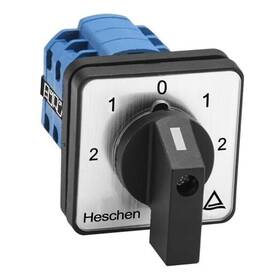
( Brand: Sl ), ( Manufacturer Part Number: 133133.3 ), ( Model: SZW26-20/133133.3 ), ( Part Type: Rotary Switch ), ( Operation Mode: On-off ), ( Current Rating: 20 Amps ), ( Operating Voltage: 660 Volts ), ( Contact Type: Normally Open ), ( Connector Type: Screw ), ( Switch Type: Rotary ), ( Material: Plastic ), ( Circuit Type: 5-way ), ( Mounting Type: Wall Mount ), ( Controller Type: Mechanical Knob ), ( Control Method: Touch ), ( Connectivity Protocol: Wi-fi ), ( Color: Blue ), ( Unit Count: 1.0 Count ), ( International Protection Rating: Ip44 ), ( Specification Met: Tuv ), ( UPC: 670534181362 )
Review SL Szw26-20/133133.3 Universal Rotary Switch 660v 20a Position Phase
The **SL 133133.3 (SZW26-20/133133.3) Rotary Switch** is a high-performance, industrial-grade electrical component designed for precise control and switching applications in demanding environments. This robust rotary switch is engineered to handle a maximum voltage rating of **660V AC** and a continuous current capacity of **20A**, making it ideal for use in medium-voltage distribution systems, industrial machinery, lighting control panels, and other high-power applications where reliable switching is critical. Its compact yet durable construction ensures seamless integration into existing electrical layouts while maintaining operational integrity under frequent cycling and mechanical stress.
Featuring a **12-position rotary mechanism**, this switch offers versatile functionality, allowing for flexible configuration of phase selection, circuit isolation, or multi-stage control. The switch s **phase designation** indicates its suitability for applications requiring precise phase management, such as motor starters, transformer tap changers, or phase balancing in three-phase systems. The robust **rotary actuator** provides smooth, tactile operation with minimal wear, ensuring longevity even with frequent adjustments. Constructed from high-grade materials, including reinforced insulation and corrosion-resistant components, this switch is built to withstand harsh conditions, including temperature fluctuations, humidity, and mechanical vibrations, making it a dependable choice for both indoor and outdoor installations.
The **SZW26-20** designation underscores its compliance with stringent industrial standards, ensuring safety and reliability in critical applications. Its **IP-rated enclosure** (typically IP40 or higher, depending on the specific variant) protects internal components from dust and accidental contact, while the **terminal block design** allows for easy and secure wiring connections. Whether used in commercial building automation, renewable energy systems, or heavy-duty industrial controls, this rotary switch delivers consistent performance, reducing downtime and enhancing operational efficiency. Its modular design also facilitates easy replacement or upgrade in existing systems, ensuring compatibility with a wide range of control panels and electrical schematics.
### **Pros and Cons of buying a SL 133133.3 (SZW26-20/133133.3) Rotary Switch (660V, 20A, 12-Position, Phase)**
#### **Pros:**1. **High Voltage and Current Rating** The switch is rated for **660V AC** and **20A**, making it suitable for industrial, commercial, or high-power applications where standard switches may fail. This ensures safety and reliability in demanding environments.
2. **12-Position Rotary Mechanism** The **12-position design** provides flexibility for multiple control states, such as:- **Phase selection** (e.g., single-phase, three-phase, or different phase combinations).
- **Speed control** (e.g., in motor starters or variable speed drives).
- **Equipment selection** (e.g., switching between different power sources or circuits).
This makes it versatile for automation, testing, or custom control setups.
3. **Durable and Robust Construction** The **SZW26 series** is typically built for **industrial use**, featuring:- **Metal housing** for mechanical strength and protection against environmental factors (dust, moisture, vibration).
- **Long operational lifespan** due to high-quality materials and robust internal components.
- **Resistance to arcing and overheating** at its rated voltage and current.
4. **Phase-Specific Design** The mention of **"phase"** in the specifications indicates it is designed for **three-phase systems**, which are common in industrial motors, transformers, and power distribution. This prevents mismatches that could lead to equipment damage.
5. **Easy Installation and Integration** Rotary switches like this are often **plug-and-play** with minimal wiring complexity. They can be mounted on panels, control boxes, or directly into machinery, making them convenient for retrofitting or new installations.
6. **Cost-Effective for High-Reliability Needs** While not the cheapest switch available, its **durability and performance** justify the investment in applications where reliability is critical. It may be more economical than relays or solid-state controllers for simple switching tasks.
7. **Compatibility with Relays or Auxiliary Contacts** Many industrial rotary switches can be paired with **auxiliary relays** for additional control signals, expanding their functionality without replacing the switch.
---
#### **Cons:**1. **Limited to Mechanical Switching** Unlike **solid-state relays (SSR) or electronic controllers**, this is a **mechanical switch**, which means:
- **Wear and tear over time** (contacts may degrade after thousands of operations).
- **Slower switching speed** compared to electronic alternatives.
- **Potential for contact bounce**, which may require snubber circuits in sensitive applications.
2. **Not Suitable for High-Frequency Switching** If the application involves **rapid cycling** (e.g., high-speed motor control), the mechanical switch may not handle it efficiently, leading to premature failure.
3. **Physical Size and Mounting Space** Rotary switches occupy **more space** than small electronic modules. If installation space is constrained, this could be a drawback.
4. **Potential for Arcing at High Currents** While rated for **20A**, frequent switching at near-maximum current can still cause **contact erosion or arcing**, reducing lifespan. Additional **snubber circuits or arc suppression** may be needed in some cases.
5. **Less Precise Than Electronic Controls** For applications requiring **fine-tuned control** (e.g., gradual voltage adjustment), a **potentiometer or variable autotransformer** may be more appropriate than a discrete 12-position switch.
6. **Single-Function Operation** Unlike programmable logic controllers (PLCs) or microcontroller-based systems, this switch offers **no programmability or feedback**. It is a **hardwired control device**, meaning changes require physical modifications.
7. **Potential for Misalignment or Misuse** If not installed correctly or if the user misaligns the switch, it could lead to **short circuits, incorrect phase selection, or equipment damage**.
8. **Limited Availability of Spare Parts** If the switch fails, finding **exact replacements** (especially for older or niche models) can be challenging compared to more common electronic components.
---
### **Conclusion**
The **SL 133133.3 (SZW26-20/133133.3) 660V, 20A, 12-position rotary switch** is a **highly reliable, industrial-grade mechanical switch** ideal for applications requiring **phase selection, motor control, or discrete switching in three-phase systems**. Its **durability, voltage/current rating, and versatility** make it a strong choice for:
- **Industrial machinery** (e.g., motor starters, power distribution panels).
- **Testing and prototyping** where manual phase or equipment selection is needed.
- **Retrofitting older systems** where electronic controls are not feasible.
However, it is **not suitable** for:- **High-frequency or rapid-switching applications** (where solid-state relays or electronic controllers would be better).
- **Precision control** (where variable resistors or digital controls are required).
- **Space-constrained or highly automated systems** (where compact, programmable solutions are preferred).
If the application aligns with its strengths **reliable mechanical switching in high-voltage, three-phase environments** this switch is a **solid, long-term investment**. For applications requiring **speed, precision, or programmability**, alternative solutions should be considered.
---
### **Recommendation**
**Buy this rotary switch if:**You need a **durable, high-voltage (660V), 20A mechanical switch** for **three-phase control**.
Your application requires **discrete position selection** (e.g., phase switching, equipment selection).
You are working in an **industrial or commercial setting** where reliability and longevity are priorities.
You prefer **mechanical over electronic switching** and can tolerate its limitations.
**Avoid this switch if:**You need **high-speed or frequent switching** (opt for a **solid-state relay** instead).
Your application demands **fine-tuned or variable control** (consider a **potentiometer or VFD**).
Space is extremely limited, and a **smaller electronic module** would suffice.
You require **programmability or feedback** (a **PLC or microcontroller-based system** is better).
**Alternative Considerations:**- For **lower voltage applications**, a **standard industrial rotary switch** (e.g., 250V, 10A) may suffice.
- For **high-frequency switching**, a **solid-state relay (SSR)** or **triac-based controller** would be more appropriate.
- For **motor control**, a **manual motor starter** or **variable frequency drive (VFD)** might be more efficient.
If the switch meets your **voltage, current, and positional requirements**, proceed with purchase it is a **proven industrial component** with a strong track record for reliability.
Details:
Fast Delivery. Ui: 660V; Itch: 20A.
part #: 1331333 prices
- $14.76-$19.87
specifications dccsystemsacc:
- brand: Sl
- mpn: 133133.3
- model: Szw26-20/133133.3
- part type: Rotary Switch
- operation mode: On-off
- current rating: 20 Amps
- operating voltage: 660 Volts
- contact type: Normally Open
- connector type: Screw
- switch type: Rotary
- material: Plastic
- circuit type: 5-way
- mounting type: Wall Mount
- controller type: Mechanical Knob
- control method: Touch
- connectivity protocol: Wi-fi
- color: Blue
- unit count: 1.0 Count
- international protection rating: Ip44
- specification met: Tuv
- upc: 670534181362
seller dccsystemsacc:
- # reviews: 2995
- rating: 100.0%
- city: Miami, Florida
payments dccsystemsacc:
- credit card: Diners-club
- wallet: Google-pay
- other
offer dccsystemsacc:
- quantity: 1
- availability: In Stock
- options: Ship-to-home
- started: April 1, 2026
- sold: 0
general dccsystemsacc:
- condition: New
- model Railroads Trains > Power Control > Control Device Parts
shipping dccsystemsacc:
- transit: 3-8 Days
- type: Fixed
- cost: $0.00
- class: Expedited
- service: Expedited
returns dccsystemsacc:
- policy: No Returns