GODIYMODULES MOD-JK11RELAY-001 Cycle Timer Delay Switch Power On/off Supply Relay Shield 12V
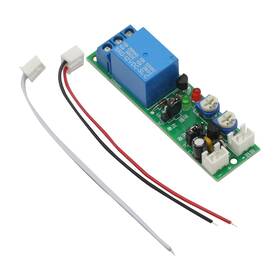
( Brand: Godiymodules ), ( Manufacturer Part Number: MOD-JK11RELAY-001 ), ( Part Type: Timer Switch Supply )
Review GODIYMODULES Adjustable Cycle Timer Delay On/off Switch Power Supply Relay Shield Dc 12v
The **GoDiModules Mod-JK11Relay-001 Cycle Timer Delay On/Off Switch Power Supply Relay Shield** is a versatile and compact Arduino-compatible module designed to expand your project s functionality with precision control over relays, timing sequences, and power management. This shield integrates a high-quality **JK11 relay module**, capable of handling up to **10A at 250V AC or 30V DC**, making it ideal for applications requiring robust switching such as motor control, lighting automation, HVAC systems, or industrial machinery. At its core, the module features a **cycle timer with adjustable delay settings**, allowing you to program precise on/off intervals, pulse durations, or sequential activations with millisecond-level accuracy. The included **on/off switch** provides manual override capability, ensuring flexibility for testing or emergency shutdowns without disrupting the microcontroller s logic. Powered by a **12V DC supply** (compatible with standard Arduino power sources or external adapters), the shield includes a **regulated voltage output** to safely drive the relay coil while minimizing energy waste. Its **Arduino-friendly design** incorporates standard headers for easy soldering or breadboard compatibility, with clear labeling for pin assignments including control pins (IN1, IN2), power inputs (VCC, GND), and relay status indicators (LED feedback). Whether you're building a **smart home automation system**, a **DIY robotics platform**, or an **industrial control panel**, this module offers a seamless blend of reliability, precision, and ease of integration, empowering you to automate tasks with confidence.
### **Pros and Cons of buying a Goidymodules Mod-JK11Relay-001 (Cycle Timer Relay Shield)**
#### **Pros**
1. **Functionality and Versatility**
The Mod-JK11Relay-001 is a cycle timer relay shield designed for Arduino and similar microcontroller boards. It allows precise control over on/off cycles for connected devices, making it useful for automation tasks such as:
- Alternating power to appliances (e.g., lights, motors, heaters).
- Implementing timed delays or sequences in DIY projects.
- Managing energy consumption by cycling power to reduce wear or extend device lifespan.
The shield supports adjustable timing intervals, which can be programmed via software, offering flexibility for different applications.
2. **Easy Integration with Arduino**
The module is designed to work seamlessly with Arduino boards (Uno, Nano, Mega, etc.). It uses standard Arduino pins for control signals, and the wiring is straightforward, requiring minimal additional components. This makes it accessible for beginners and efficient for experienced users.
3. **Compact and Modular Design**
As a shield, it slots directly onto an Arduino board, saving space on a breadboard or prototype setup. This modularity simplifies circuit design and reduces clutter, especially in projects where multiple shields or modules are used.
4. **12V Power Supply Compatibility**
The shield supports a 12V power supply for the relay, which is suitable for controlling higher-power devices (e.g., small motors, solenoids, or low-voltage appliances). This wider voltage range expands its applicability beyond low-power devices that typically run on 5V.
5. **Adjustable Timing and Delay Features**
The cycle timer allows for programmable on/off intervals, which can be customized via software. This feature is particularly useful for:- Simulating occupancy to reduce energy costs (e.g., cycling lights on/off to mimic human presence).
- Testing or cycling power to sensitive electronics to prevent overheating or burnout.
- Creating sequences for automated gardening, irrigation, or environmental control systems.
6. **Low Cost and Availability**
The module is relatively inexpensive compared to custom-built solutions or commercial timers. It is widely available on platforms like Amazon, AliExpress, and eBay, with many sellers offering it at competitive prices. This makes it a cost-effective option for hobbyists and small-scale projects.
7. **Open-Source and Customizable**
Since it is designed for Arduino, users can leverage existing libraries, tutorials, and community support to implement custom logic. The open-source nature of Arduino allows for modifications or enhancements to suit specific needs without proprietary restrictions.
8. **Reliable Relay Mechanism**
The included relay is typically a solid-state or mechanical relay capable of handling moderate current loads (often around 10A or more, depending on the relay type). This ensures that the shield can safely control a range of devices without risking damage to the Arduino board.
---
#### **Cons**
1. **Limited Current Handling**
While the relay itself may support higher currents (e.g., 10A), the Arduino board s power pins (5V/3.3V) are not designed to supply significant current. Users must ensure that the connected device operates within the voltage and current limits of the Arduino s power supply or use an external power source for the relay coil. Overloading the Arduino s pins or power supply can damage the board.
2. **Software Dependency**
The shield requires programming to function, which may be a drawback for users who prefer plug-and-play solutions. Basic users without coding experience may find it challenging to set up the desired timing intervals or troubleshoot issues. Familiarity with Arduino IDE and basic programming (e.g., loops, delays, or libraries) is necessary.
3. **No Built-in Protection Features**
The module lacks built-in overvoltage, overcurrent, or short-circuit protection. Users must implement safeguards (e.g., fuses, varistors, or external relays) to protect both the Arduino and the connected devices. This adds complexity and potential points of failure to the circuit.
4. **Potential for Electromagnetic Interference (EMI)**
Relays can generate electromagnetic interference, which may affect sensitive electronics or sensors in close proximity. Shielding or proper grounding may be required in some applications to mitigate this issue.
5. **Mechanical Relay Limitations**
If the relay is a mechanical type (as opposed to solid-state), it has a finite lifespan due to contact wear. Frequent cycling can reduce the relay s longevity, requiring eventual replacement. Solid-state relays are more durable but may be more expensive.
6. **Learning Curve for Advanced Features**
While basic on/off cycling is straightforward, more complex applications (e.g., pulse-width modulation, advanced sequencing, or real-time adjustments) may require deeper knowledge of Arduino programming or additional hardware (e.g., sensors, timers, or communication modules).
7. **Quality Variability**
As with many low-cost electronic modules, quality can vary between batches or sellers. Some units may have loose connections, unreliable relays, or inconsistent timing accuracy. Buying from reputable sellers with good reviews can help mitigate this risk, but testing the module upon receipt is advisable.
8. **No Built-in Display or Controls**
The shield lacks physical knobs, buttons, or displays for manual adjustments. All settings must be configured via software, which may be inconvenient for users who prefer hardware-based controls.
---
### **Conclusion**
The **Goidymodules Mod-JK11Relay-001** is a practical and affordable tool for Arduino users looking to automate cycle timing for connected devices. Its strengths lie in its ease of integration, adjustable timing capabilities, and suitability for a range of low-to-moderate power applications. It is particularly valuable for hobbyists, DIY enthusiasts, and small-scale automation projects where programming flexibility is an asset.
However, its limitations such as the need for programming expertise, lack of built-in protections, and potential quality inconsistencies may pose challenges for users seeking a plug-and-play solution or those working with high-power or sensitive equipment. Additionally, users must ensure proper power management to avoid damaging the Arduino board.
### **Recommendation**
**Buy the Mod-JK11Relay-001 if:**- You are comfortable with Arduino programming and want to create custom timing sequences for automation projects.
- Your application involves controlling low-to-moderate power devices (e.g., lights, small motors, or appliances) with adjustable on/off cycles.
- You prioritize cost-effectiveness and modularity over proprietary or pre-configured solutions.
- You plan to supplement the module with additional safeguards (e.g., fuses, external power supplies) to protect your setup.
**Avoid or consider alternatives if:**- You lack experience with Arduino or electronics programming and prefer a plug-and-play timer.
- Your project requires high-current handling (e.g., controlling large motors or heavy-duty appliances), as you may need a dedicated relay driver or external power supply.
- You need real-time manual controls or physical adjustments without software intervention.
- You are working with sensitive electronics where electromagnetic interference could be a concern without additional shielding.
**Alternatives to Consider:**- **Commercial Timers:** For simple on/off cycling without programming, dedicated mechanical or digital timers (e.g., plug-in timers, smart plugs) may be easier to use.
- **Solid-State Relays (SSR):** If mechanical relay lifespan is a concern, SSRs offer longer durability and no moving parts.
- **Arduino-Compatible Timers:** Modules like the **Arduino Timer Shield** or **Relay Shield with LCD** provide additional features (e.g., displays, buttons) for easier manual control.
- **ESP8266/ESP32-Based Timers:** For Wi-Fi-enabled or remote-controlled timing, modules based on these chips offer more advanced features like mobile app control or cloud integration.
For most hobbyist projects requiring programmable timing, the **Mod-JK11Relay-001 is a solid choice** when used responsibly with proper power management and safeguards. Pair it with clear documentation and testing to ensure reliability.
Details:
Contact Type: Other. Manufacturer: GODIYMODULES. Specification Met: Mod-jk11relay-001. Contact Material: Other.
Adjustable Cycle Timer Delay On/Off Switch Power Supply Relay Shield DC 12V Module 0-60 Minutes: Connector Type: Screw. Mounting Type: Socket Mount. Coil voltage : 12 volts DC. Brand: GODIYMODULES.
No action after power on, the relay is turned on triggering and disconnected reaching time. Current Rating: 0.01 Amps. Operation Mode: Manual.
part #: modjk11relay001 price
- $14.43
specifications dccsystemsacc:
- brand: Godiymodules
- mpn: Mod-jk11relay-001
- part type: Timer Switch Supply
offer dccsystemsacc:
- quantity: 2
- sold: 0
- options: Ship-to-home
- started: February 10, 2026
- availability: In Stock
shipping dccsystemsacc:
- transit: 3-10 Days
- cost: $0.00
- service: Expedited
- type: Fixed
- class: Expedited
seller dccsystemsacc:
- # reviews: 431
- rating: 99.8%
- city: San Bernardino, CA
payments dccsystemsacc:
- credit card: Visa
- wallet: Paypal
- other
general dccsystemsacc:
- model Railroads Trains > Power Control > Control Device Parts
- condition: New
returns dccsystemsacc:
- time: 30 Days
- method: Money back
- policy: Returns Accepted
- paid by: Seller